
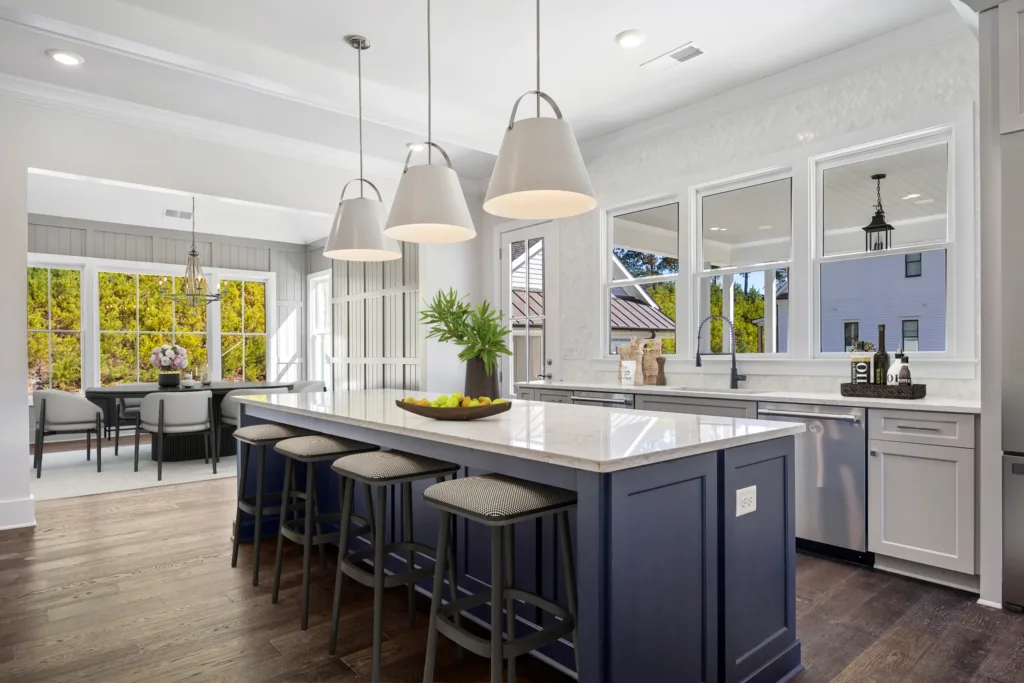
Ask a buyer what they want in a new home and listen closely. They rarely start with square footage. They talk about slow Saturday mornings, kids playing outside, the ease of carrying groceries straight into the kitchen, and a porch made for coffee. They describe a life.
That's the quiet shift shaping how the smartest builders are marketing new homes in 2026. The home still matters enormously, but it works as the setting rather than the whole story. The winning move is to help buyers picture the life your community makes possible, then back it up everywhere they look.
Strategy comes first, and design and content follow. Here are four ways to put that into practice.
1. Lead With the Story
People fall in love with a feeling long before they fall in love with a floor plan. So the first question isn't "How do we show off this home?" It's "Whose life are we helping people imagine here, and what makes ours different from the builder down the road?"
Storytelling is how you answer that. The research backs it up. When John Burns Research & Consulting studied what's resonating with buyers today, the messages winning out were the ones that felt personal and rooted in real life rather than status. Buyers respond when they sense that a builder actually understands how they live.
So get specific about what makes your community yours:
- Think about what an ordinary, wonderful day here feels like, from the morning rush to the evening wind-down.
- Identify what you offer that no one else in the market does, whether that's a walkable trail system, a design that keeps parents and kids connected, or simply a slower pace of life.
- Ask whether a buyer can picture themselves in it, or whether they're just reading a spec sheet.
When you name the life your buyer is trying to build and show them your community is the place to build it, you stop competing on price and finishes alone. You give them something to fall for.
2. Create Buzz With Events
A story lands harder when people can step inside it. That's what events do, because they turn a community from images on a screen into a place buyers have actually stood in, felt, and talked about.
Host something worth showing up for, like a model-home grand opening, a food-truck weekend, a hard-hat preview, or a "meet the neighborhood" evening. Gatherings like these do double duty. They let prospective buyers physically experience the lifestyle you've been describing, and they get people talking, which is the kind of word-of-mouth no ad budget can buy.
Then, let the event live on across your channels. Tease it beforehand with countdowns, capture it as it happens, and recap it afterward. Photos of a community actually coming alive are some of the most persuasive marketing you'll ever create, because they're real.
3. Build an Engaging Website
Once your story pulls people in, your website is where curiosity turns into a lead. It's your hardest-working salesperson, and it never clocks out. This is where a smart residential developer digital marketing strategy earns its keep.
Two things matter most here. The first is floor plans that tell a story. Instead of posting a silent diagram, narrate it. BuilderGuides makes a sharp point on this, suggesting you describe the "seamless transition from the entry to the main living area" or the "intentional privacy" of a bedroom tucked away from the primary suite. When you pair the visual with the words, buyers feel the flow instead of just seeing the lines.
The second is lookbooks that spark imagination. Give buyers inspiration to dream by showing what a flex room could become, whether that's a home office, a gym, or a playroom. BuilderGuides notes that even simple digital staging or a Canva vision board can do this well. When people can see themselves in a space, they stop shopping around.
An engaging website isn't a brochure. It's a test drive.
4. Make It Look Like the Life
If storytelling is the script, imagery is the set, and it has to feel like a place real people actually live. Great visuals are what carry your story from your website to a buyer's "I need to see this in person."
The key is consistency everywhere buyers look. On your website, that means hero imagery that shows the life rather than just the listing. On social, it means a mix of the aspirational and the genuinely authentic. On FMLS and in your listing photos, it means recognizing that this is where a huge share of buyers form their very first impression. Those images decide whether someone clicks or scrolls right past, so make every one of them earn its place.
One believable, lived-in look across all three beats a dozen glossy but generic shots. When the imagery matches the story, buyers trust both.
From Clicks to Closings
Tie it all together and the throughline is simple. Help buyers picture the life, then prove it everywhere they look. Story gives them something to feel, events let them feel it in person, and your website turns that feeling into a lead. Strong, consistent imagery makes the whole thing believable, which is exactly what moves someone from browsing to buying, from clicks to closings.
The floor plans and finishes still matter. They're simply in service of something bigger now, which is a life your buyer can't stop imagining.
That's the kind of strategy-first thinking the Clementine team lives for. If you're ready to turn your next community into a story buyers can see themselves in, connect with the Clementine Creative team today, and let's write the next chapter together.
Take a look at some of the branding, marketing, and website work we've done to bring home communities to life: